
The Old Train Depot Haunting: A Story of Echoes on the Rails
Long before the neon lights and weekend crowds of downtown Orlando, Florida, the site of the old train depot held the rhythms of steam engines, the clack of iron wheels, and the anxious farewells of travelers. That build...
By Rebecca "Madam Chronicler" Ryan
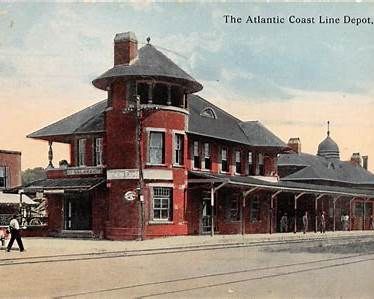
Long before the neon lights and weekend crowds of downtown Orlando, Florida, the site of the old train depot held the rhythms of steam engines, the clack of iron wheels, and the anxious farewells of travelers. That building is the Church Street Station (originally the Old Orlando Railroad Depot), erected in 1889 to serve the burgeoning railroads of the region. Wikipedia+2Wander Florida+2
But beneath the historical significance lies another layer — tales of shadows, footsteps in empty rooms, and rail whispers that refuse to stay silent. This is the story of how the station became haunted.
1. Arrival: The Depot’s Early Life
In the late 19th century, Orlando was emerging from its pioneer roots. In 1889, the South Florida Railroad built the depot at Church Street as a key passenger and freight stop. Wikipedia+1 It was Victorian in style, a hub of departures and arrivals, excitement, and commerce.
Picture a hot Florida afternoon—steam billowing from a locomotive, travelers in linen suits stepping onto the platform, porters with luggage. The depot was young, vital. Its architecture—shingled, ornate—bore the optimism of the era.
But with such human movement always comes human drama. Moving parts. Lives intersecting. And when we layer in the later transformations of the site, the stories begin to twist.
2. Shifting Tracks: From Hub to Haunted📷
By 1926, passenger service had largely moved elsewhere, and the depot’s uses evolved. Wikipedia In the decades that followed, the surrounding area shifted from strictly railroad to retail and entertainment—a metamorphosis that brought new energy, but also concealed the past.
By the 1970s, the Church Street block—centered on the station—became an entertainment complex. But as the lights flashed and the crowds came, some of the older structures quietly accrued stories of things unseen. Endless Summer Florida+1
It was around these transformations that the haunted reputation began to settle on the depot and its environs.
3. Whispers on the Platform
There are many tales. One of the most persistent: that the depot is haunted by “travellers” who never left, waiting for a train that never arrives. As one local ghost-tour guide put it:
“Ghosts of travelers waiting for a train have been seen at the old train depot.” WKMG+1
Consider: the echoes of so many departures, of those who waited for someone else or were left behind. The idea that a spirit might stand on the platform, suitcase in hand, still waiting for its final journey, is evocative.
One ghost-tour description shares that staff and visitors have reported shadow figures, flickering lights without electrical cause, cold spots, and other classic haunting tropes. Wander Florida+1
4. The Brothel Upstairs and the Mourning Children
The depot’s story doesn’t stand alone; it is intertwined with adjacent buildings, especially the old hotel once known as the Strand Hotel. That hotel, located above or adjacent to the depot structure, was rumored to have been used as a brothel in the late 19th/early 20th century. Wikipedia+1
Within the ghost-tour lore lies the story of the “illegitimate children of prostitutes” who died unacknowledged and whose spirits may linger. One tour operator described the location as “Orlando’s darkest haunted location.” US Ghost Adventures+1
The image is haunting: the depot’s polished floors, the glass of the ticket windows, the echo of footsteps—not just of travelers but of sorrow, unsung good-byes, unfulfilled lives. These layered human stories deepen the spectral reputation.
5. Personal Encounters in the Dark
In the dozens of ghost-tour accounts, certain details repeat:
- A young man named “Aaron”: On Church Street, not necessarily in the depot building proper, but in the buildings of that block, one guide says:
“One is named Aaron… a young man with an ‘alfalfa’-style haircut and a suit that is slightly too big for him… he stands as if he is waiting for his picture to be taken.” WKMG
- Trigger objects: Stuffed puppies, wheelchairs moving on their own, tables haunted by an elderly man—though these may refer to the hotel or surrounding site rather than the depot alone. WKMG
- Phantom train whistles: Some bringing to mind the idea of spectral arrivals and departures, as if the station still serves unseen passengers. Mostly Solo Travel
These anecdotes may or may not satisfy scientific rigor—but they do speak to the power of place. Buildings carry memory. When so many humans passed through the depot, each with their own farewells and dreams, perhaps their echoes linger.
6. Architectural Memory and the Unseen
The structure itself matters. A building from 1889, adapted and repurposed, always changes—but its bones remain. According to the National Register listing:
The Old Orlando Railroad Depot was built in 1889, architect T. B. Cotter, in an eclectic Victorian/Shingle style. Wikipedia
Qualities that often enhance “haunted” reputations include: old wood creaking, ornate architecture with hidden spaces, disused upper floors, and a sense of discontinuity between past and present—between waiting rooms now converted into bars, tracks now repurposed, rooms once used for travel now used for nightlife.
As one article on hauntings notes:
“Constructed in the early 1900s, the depot witnessed countless arrivals and departures during Florida’s tourism boom.” Endless Summer Florida
In other words: context matters. The building’s original purpose provided the human churn; the present-day dislocation helps the imagination fill in gaps.
7. The Ghost Tour Industry and the Lore
The depot has become a key stop on ghost tours of downtown Orlando. Companies like Orlando Haunts describe it as among the city’s “darkest haunted locations,” specifically referencing the depot + Strand hotel block. US Ghost Adventures+1
Ghost tours serve a dual purpose: entertainment and local history. They weave documented facts (dates, uses, architecture) with oral tradition and unexplained experiences. For example:
“On this ghost tour… you will learn the spooky, haunted history of the spirits remain in the old train depot…” amerighost.com
Such statements show how the depot’s haunted reputation has become codified in local tourism. The building now stands not just as a piece of transport history but as a cultural site where memory, fear, and fascination meet.
8. Why Does the Depot Haunt?
What makes this particular location ripe for ghost stories?
- High volume of human passage: So many people arrived and departed through the depot—each one a story, a connection, an ending or beginning. Places with lots of movement are often more ghost-rich in folklore.
- Unquiet transitions: The shift from passenger terminal to entertainment complex means many spaces are repurposed; rooms once quiet now echo with different sounds, making them ripe for odd experiences.
- History of marginalized lives: The stories of brothel upstairs, of children who died unacknowledged, of people whose lives are less documented—all feed into haunted-space narratives.
- Atmospheric architecture: Victorian style, possible hidden rooms, high ceilings, wood, metal—all contribute to ambiance.
- Cultural demand: The public’s appetite for ghost stories in Orlando adds fuel to the retelling power. Each tour adds a layer, each account a new detail.
9. A Night Among the Ghosts
Let me take you into a fictionalized moment:
It’s after midnight. The crowds have dispersed from Church Street. You slip through the door of the old depot—its arching windows dark, the platform lights off, only street-lights reflecting on the glass. You walk along what was once a bustling waiting room, seats long gone, luggage trolleys cleared out. You pause at a window overlooking the tracks—a switchboard, some old signage.
Suddenly you feel it—a hush. The hum of distant traffic fades. You perceive a faint whistle, not mechanical, and you turn to see a figure at the far end of the platform: a young man in a loose-fitting suit, staring down the rails. You blink; he’s gone. A cold spot envelopes you. Your camera flickers.
You brush it off—but the story stays with you. When you tell your friends, they shift uncomfortably near the empty corridor. And the next day, you read again of the depot’s haunted lore.
Whether real or imagined, the moment shaped you. And such is the power of a place layered with memory.
10. The Depot Today: Between Past and Present
Today, the Church Street Station complex remains a mixture of historic building, retail/entertainment venue, and rail service stop (for SunRail). The original 1889 depot building is still listed on the National Register. Wikipedia
The ghost stories have not stalled—if anything, they have grown. Many guides caution visitors to respect the spaces, to bring a camera, to wear comfortable shoes. Some tours explicitly invite ghost-hunters. amerighost.com
Yet the depot is also evolving. Modern city life collides with old. The ornate windows still stand; the tracks still channel some trains; the past whispers beneath the present.
11. Skeptic’s Corner
Of course, it’s worth noting: many reported ghosts at the depot, like elsewhere, remain anecdotal. Cold spots, shadow figures, unexplained flickers—these are typical of ghost lore and alone don’t prove the paranormal. Some experiences may be due to building acoustics, stray light, the imagination of a visitor primed for a scare.
For instance, one article noted that a haunted-claiming lease dispute for the building included reference to ghosts, yet the landlord denied any “ghosts in, on, above, below or around the property.” Wikipedia+1
So when reading or telling ghost stories, it is wise to hold both mystery and reason in your mind.
12. Why This Story Matters
Why write about the haunting of the depot? Because these stories connect us to place, to time, to the human condition. They remind us:
- That history isn’t just dates and re-barrels—it’s lived lives.
- That buildings aren’t inert: they carry memory.
- That the future re-uses the past, and sometimes the past lingers in ways we cannot fully explain.
- That fear and fascination are part of what keeps places alive in public imagination.
For the blogger or storyteller, the depot stands as a potent metaphor: arrival and departure, hope and loss, visibility and shadow.
13. Final Arrival: A Train Beyond Time
As our story circles back, imagine again the platform of 1889: steam engine, conductor’s call, the click-clack, the farewells, the arrivals. Now fast-forward: the rails quiet, the station repurposed, the lights dim at night. And in that inherited stillness, some say the sounds continue—the whistle of a train long gone, the soft shuffle of a lingering passenger, perhaps the faint creak of an old suitcase being rolled across the tile.
You exit the depot, glance back once. The windows reflect your own silhouette and something else behind you—just a flicker. Maybe it was a shadow. Maybe not.
The depot stands. The ghost stories remain. And the next time someone waits for a train—or if a building waits for something—they might recall this place and ask: “Is the train coming? Or did it already pass?”
Bibliography
- “These 15 Orlando area spots are among the most haunted in Florida.” WKMG ClickOrlando, 1 Nov 2022. WKMG+1
- “Top 10 Most Haunted Places in Orlando.” Wander Florida. Wander Florida
- “A Spooky Stroll Through Orlando: The Ghost Tour That’ll Give You Chills.” MostlySoloTravel.com. Mostly Solo Travel
- “The old Orlando train depot downtown generates numerous ghost sightings.” EndlessSummerFlorida.com. Endless Summer Florida
- “Orlando Haunted Ghost Tour: … spirits remain in the old train depot…” AmeriGhost Tours. amerighost.com
- “Church Street Station.” Wikipedia. Wikipedia
About the Author
Rebecca “Madam Chronicler” Ryan is a writer and researcher for The Chronicler Library. She is the co-creator of The Chronicle of Fear and The Waterline Chronicles, and a lead researcher and contributor for The Captain’s War Chronicles and The Captain’s Cellar. Her work blends myth, history, and the natural world with empathy, insight, and intellectual rigor.
Originally published at the live site .