Folklore ·
🩸 The Vampires of New Orleans
New Orleans is a city where myth breathes alongside history. Shadows cling to wrought-iron balconies, and the humid air of the French Quarter feels charged with secrets. Known for jazz, Mardi Gras, and voodoo, the Cresce...
By Rebecca "Madam Chronicler" Ryan
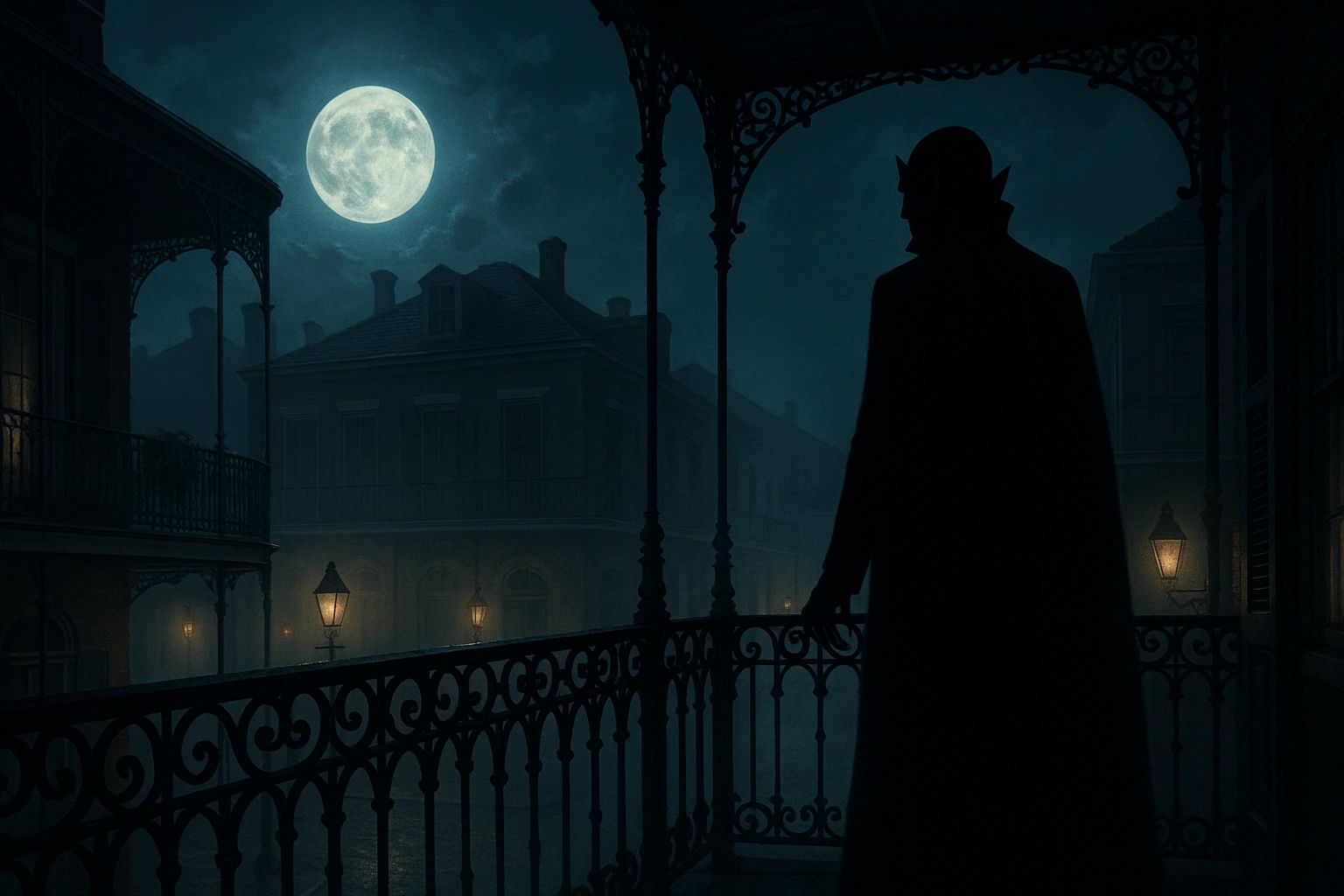
New Orleans is a city where myth breathes alongside history. Shadows cling to wrought-iron balconies, and the humid air of the French Quarter feels charged with secrets. Known for jazz, Mardi Gras, and voodoo, the Crescent City also holds a darker allure — one of blood, immortality, and the undead.
For centuries, tales of vampires have wound through its cobblestone streets. Whether whispered in taverns or re-imagined in modern novels, the vampire legend has become as essential to New Orleans’ identity as its gumbo and ghost tours. This is the story of how it all began — and how it still thrives today.
1. Why New Orleans Is the Perfect Vampire City
Before delving into the lore, it’s worth asking why New Orleans became the quintessential vampire city.
Atmosphere is a major reason. The city’s architecture — with its Creole townhouses, flickering gas lamps, and ancient cemeteries — creates a natural gothic backdrop. Add the humid nights, mist rising off the Mississippi, and the jazz spilling from every doorway, and you have the perfect stage for the supernatural.
Cultural diversity also plays a role. French, Spanish, Caribbean, and African influences merged here, blending European tales of the undead with local spiritual traditions like Voodoo.
Death and disease shaped the narrative too. In the 18th and 19th centuries, yellow-fever epidemics ravaged the city. People died mysteriously overnight, their bodies pale and bloodless — and where medicine could not explain, folklore filled the void. Vampires became the answer.
Finally, New Orleans has embraced its darkness. Ghost and vampire tours, vampire-themed bars, and festivals like the Endless Night Vampire Ball all celebrate the city’s haunted mystique. Here, myth and marketing intertwine seamlessly.
2. The Birth of New Orleans Vampire Lore
A. The Casket Girls of the Ursuline Convent
The earliest vampire legend dates back to the 1720s with the arrival of the “Casket Girls” — or filles à la cassette. These young women came from France to marry settlers and carried small chests, or “cassettes,” with their belongings.
When the women arrived, the locals, already steeped in superstition, whispered that these “caskets” contained more than clothing — perhaps coffins. The women were housed in the attic of the Old Ursuline Convent, whose shutters were allegedly sealed with nails blessed by the Pope.
Over time, rumors spread that vampires had been hidden in those boxes or that the women themselves were undead. The attic remains closed to the public to this day, fueling the legend further.
Though historians dismiss the story as colonial paranoia, it remains the foundational vampire myth of the city.
B. Imported Myths: From Europe to the Bayou
European settlers brought their own vampire traditions. The French told tales of the revenant, spirits who returned to drain the living. Spaniards brought stories of el vampiro. Eastern European immigrants added the vǎmpir and nosferatu.
As these myths crossed the Atlantic, they fused with African and Caribbean folklore about energy-draining spirits. New Orleans — a melting pot of cultures and religions — became fertile ground for such stories to evolve into something uniquely Creole and American.
C. Vampires as Explanations for Tragedy
Before modern medicine, epidemics baffled residents. Victims of yellow fever grew pale and weak, and entire families perished overnight. Without scientific answers, people turned to superstition. Vampires were a convenient scapegoat — invisible predators feeding on the living.
The fear of disease, death, and moral decay all converged in the vampire mythos, transforming folklore into a cultural comfort against the unknown.
3. Legendary Vampires of New Orleans
A. Jacques St. Germain: The Immortal Aristocrat
No vampire tale captures the city’s imagination like that of Jacques St. Germain. Said to have arrived in the early 1900s, this elegant man claimed descent from the famous 18th-century Count de St. Germain — a European noble rumored to be immortal.
Jacques threw lavish parties but never ate or drank in public. One night, a woman escaped his home screaming that he’d bitten her neck. When police arrived, St. Germain was gone, leaving behind wine bottles filled with blood.
He was never seen again.
Was he a killer, a con man, or something far more sinister? No one knows — but his legend persists, and his supposed residence on Royal Street remains a stop on many vampire tours.
B. The Carter Brothers: Depression-Era Horror
In 1932, brothers John and Wayne Carter were arrested in New Orleans after a woman escaped from their apartment, bleeding heavily. Inside, police allegedly found several victims tied to chairs, their blood drained.
At trial, the Carters were executed — but their bodies mysteriously vanished from their tombs shortly thereafter. Witnesses later claimed to see them roaming the French Quarter decades later.
Fact or fiction, the Carters’ tale blurred the line between real-world horror and the supernatural, solidifying New Orleans’ reputation as a city where nightmares walk among us.
C. The Casket Girls Revisited
The filles à la cassette story endures because it resonates on so many levels — colonial fear, female mystery, Catholic superstition. To this day, locals point to the sealed attic of the Old Ursuline Convent and whisper about what lies within.
Tour guides often pause outside its gates at night, letting silence and imagination do the rest.
4. Vampires in Fiction and Film
No one did more to immortalize the New Orleans vampire than Anne Rice. Her 1976 novel Interview with the Vampire — set in the French Quarter — transformed the undead from monsters into tortured souls. Through characters like Louis and Lestat, Rice gave vampires romance, tragedy, and existential depth.
Her novels, particularly The Vampire Chronicles, turned the city into a literary pilgrimage site. Fans still visit her home on First Street and the Lafayette Cemetery No. 1, rumored to hold “Lestat’s Tomb.”
The 1994 film adaptation starring Tom Cruise and Brad Pitt, and AMC’s modern TV series, further solidified the connection.
Other pop-culture depictions — like The Originals (a Vampire Diaries spin-off) — also place New Orleans as the supernatural capital of America. In these works, vampires aren’t outsiders; they belong to the city, woven into its music, architecture, and darkness.
5. The Real Vampires of New Orleans: A Modern Subculture
The vampires of today aren’t just myths — they’re living, breathing members of New Orleans’ subculture.
Modern self-identified vampires — “sanguinarians” (who drink small amounts of human blood with consent) and “psychic vampires” (who claim to draw energy from others) — gather openly in the city.
Groups like the New Orleans Vampire Association (NOVA) advocate for safety, consent, and charity. Many members are professionals — doctors, artists, business owners — who view vampirism as an identity rather than a delusion.
Each Halloween, hundreds gather for the Endless Night Vampire Ball, a black-tie event mixing gothic glamour with ritual and performance. Described by organizers as a “mystical masquerade,” it celebrates the vampire as both archetype and lifestyle.
This living subculture demonstrates how myth becomes reality — not through immortality, but through community and ritual.
6. Vampire Tourism: Drinking in the Darkness
The vampire economy in New Orleans is thriving. Here’s how visitors can experience it:
- Vampire Walking Tours: Guided tours through the French Quarter share the stories of St. Germain, the Carters, and the Casket Girls. Many stop at the LaLaurie Mansion, Ursuline Convent, and historic taverns.
- The Vampire Café (801 Royal Street): Serves cocktails in blood-bag pouches and dishes rich in garlic and red wine reduction — playing perfectly into the mythos.
- Lafayette Cemetery No. 1: Known for its ornate above-ground tombs and atmosphere straight out of gothic fiction.
- Endless Night Ball: Every Halloween, the city transforms into a vampiric carnival of music, masks, and moonlight.
This tourism blurs reality and fantasy. Visitors walk the same streets where stories of vampires, voodoo, and ghosts have intertwined for centuries.
In New Orleans, the line between history and legend is deliciously thin.
7. Are Vampires Real?
It depends on what “real” means.
There’s no scientific proof of immortal, blood-drinking beings haunting the French Quarter. Yet hundreds of people in New Orleans genuinely live the vampire lifestyle, finding meaning and belonging in it.
The “real” vampires donate to charity, hold blood-safety workshops, and participate in community events. They reject Hollywood caricatures but embrace the sense of otherness and transformation that vampirism represents.
As one self-identified vampire told a journalist:
“We don’t want to be feared — we just want to be understood. The city understands us because it understands darkness.”
In New Orleans, belief is often beside the point. The myth itself is the magic.
8. The Vampire as Metaphor
Beyond fear and fascination, vampires mirror the city’s identity:
- Immortality vs. Decay: New Orleans’ constant struggle between preservation and destruction reflects the vampire’s eternal battle between life and death.
- Otherness: The vampire, like many of the city’s communities, exists between worlds — neither fully accepted nor entirely hidden.
- Desire and Indulgence: Vampires, much like New Orleans itself, revel in sensuality, music, and forbidden pleasure.
- Exploiters and the Exploited: Blood as a symbol of power echoes the city’s complex history of slavery, inequality, and survival.
In short, vampires are a metaphor for the Crescent City itself — beautiful, haunted, enduring, and alive long after sunset.
9. Must-Visit Vampire Hotspots
For those who want to walk in the footsteps of the undead:
- Old Ursuline Convent – Home of the Casket Girls legend.
- LaLaurie Mansion – Associated with cruelty and vampiric rumors.
- Lafayette Cemetery No. 1 – Tombs that inspired Anne Rice’s Lestat.
- The Vampire Café – Blood-bag cocktails and gothic dining.
- Jackson Square – Frequent meeting place for night-time tours.
- Frenchmen Street – Jazz, darkness, and revelry after midnight.
- Endless Night Vampire Ball (Bourbon Orleans Hotel) – Annual celebration of the modern vampire lifestyle.
- Royal Street – Alleged residence of Jacques St. Germain.
Each site is part of a living legend — proof that in New Orleans, history and imagination feed one another eternally.
10. The Future of Vampires in New Orleans
With streaming shows, books, and new festivals, the vampire myth is stronger than ever. The AMC series Interview with the Vampire continues filming in the city, attracting new waves of fans.
Meanwhile, local communities keep the folklore alive through art, fashion, and charity. As long as the French Quarter glows under gaslight, the vampire will remain — an eternal reflection of the city’s seductive darkness.
🦇 Conclusion
In most cities, vampire stories are fiction. In New Orleans, they feel like history.
Here, the line between myth and reality blurs — in candlelit alleys, in the whisper of jazz through the mist, in the eyes of costumed revelers who may believe they’ve lived a thousand years.
Vampires, real or imagined, embody the soul of New Orleans: decadent, defiant, and timeless.
So if you ever find yourself wandering Royal Street after midnight, be sure to glance over your shoulder. In this city of eternal night, you never know who — or what — might be walking beside you.
📚 Bibliography
- Bayou Swamp Tours. “Vampires in New Orleans.” BayouSwampTours.com.
- Fodor’s Travel. “Unveiling New Orleans Vampire Legends: The Casket Girls and the Haunted Ursuline Convent.”
- Heavenly Notice. “Vampire Lore in New Orleans: Myths and Legend.” HeavenlyNotice.com, 2025.
- New Orleans Legendary Walking Tours. “The Vampires of New Orleans.” NewOrleansLegendaryWalkingTours.com.
- ViA Nola Vie. “The Real Vampires of New Orleans.” ViANolaVie.org, 2020.
- Where Y’at Magazine. “A Vampire Culture That’s to Die For.” WhereYat.com, 2024.
- Axios New Orleans. “Vampire Café Serves Blood-Bag Cocktails in the French Quarter.” Axios.com, Aug 27 2024.
- Wikipedia. “Jacques St. Germain.”
- Yesterday’s America. “The Forgotten History of Two New Orleans Vampires.”
- American Ghost Walks. “The Legendary Vampires of New Orleans.”
- Rice, Anne. Interview with the Vampire. Knopf, 1976.
- AMC. Interview with the Vampire (TV Series). 2022–present
About the Author
Rebecca “Madam Chronicler” Ryan is a writer and researcher for The Chronicler Library. She is the co-creator of The Chronicle of Fear and The Waterline Chronicles, and a lead researcher and contributor for The Captain’s War Chronicles and The Captain’s Cellar. Her work blends myth, history, and the natural world with empathy, insight, and intellectual rigor.
Originally published at the live site .